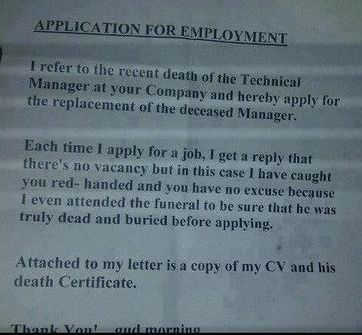
Poorly written cover letters are like letters without stamps – they won’t get you anywhere.
Key Takeaways
- A cover letter is not a summary of your CV — it is a persuasive argument for why you specifically are right for this specific role.
- Personalization is the single biggest predictor of whether a cover letter gets read; generic letters are discarded immediately.
- Every cover letter needs four elements: a strong opening, a demonstration of relevant skills, a connection to the company’s goals, and a clear call to action.
- Research the company before writing a single word — even 15 minutes on their website and LinkedIn page transforms the quality of your letter.
- Proofread twice and ask someone else to read it; a single typo in a cover letter can eliminate an otherwise strong candidacy.
Despite all the denying about the importance of cover letter, the fact is cover letters are still regarded as a great chance to create an effective first impression.
While there are no hard and fast rules about how to write cover letters there do are standard and generally accepted practices to write a notable cover letter.
Firstly, it is important to remember that a cover letter is not a job application. It is short note that accompanies your resume or portfolio and should include:
- A brief introduction about yourself
- Highlight your unique selling propositions
- Give the hirer enough confidence to read further
- Provide a call to action as to what you’d want to be done further – fixing an interview etc
Secondly, it is very important to tailor-make your cover letter as per the job. This means you will have to do some research on the company, address the letter to the concerned person (most preferably include their name) and customize it accordingly. This research can be easily and quickly done on the web.
Thirdly, it is imperative as well as logical to establish your expertise in the cover letter. Talk about your skills and show why and how you can be a good fit for the job. You can also mention how enthusiastic you are about the job position and how you can fit the corporate culture perfectly.
Last but not the least it is absolutely necessary never to write the same letter to another company. This can prove to be a greater waste of time on your part than the employers. In fact, writing a cover letter after doing your research and customizing it to fit the specific company can be the spark that gets the fire going. It is always a better idea to write bespoke cover letters to a select few companies (and wait for their response) than to write cover letters “in bulk” as they will hardly evoke a response.
Anatomy of a Strong Cover Letter
The Opening Paragraph
Most cover letters fail in the first two sentences. Candidates write: “I am writing to apply for the position of Marketing Executive as advertised on LinkedIn.” That tells the hiring manager nothing they do not already know. Instead, open with the single most relevant thing about you: a specific achievement, a direct statement of your value, or a compelling connection between your background and the company’s current priorities.
Example of a weak opening: “I am a recent marketing graduate seeking an entry-level position at your company.”
Example of a strong opening: “The social media campaign I ran for my university’s charity partnership drove a 340% increase in donations in six weeks — and that is exactly the kind of results-focused approach I would bring to your digital marketing team.”
The Middle Paragraphs
Use one or two paragraphs to expand on your most relevant skills and experiences. The key is to connect your past work directly to the job description. Identify the two or three most important requirements listed in the job posting, then provide a brief, concrete example of when you demonstrated each.
This is also where you show you have done your homework on the company. Reference a specific product launch, a company initiative you admire, or a challenge you know the business is navigating — this signals genuine interest rather than spray-and-pray applications.
The Closing Paragraph
End with confidence, not apology. Avoid phrases like “I hope to hear from you” or “Please consider my application.” Instead, use an active close: “I would welcome the opportunity to discuss how my background in X aligns with your current goals for Y — I am available for a call at your convenience.” Include your phone number in this paragraph as well as in the header.
Practical Steps to Customizing Your Cover Letter
- Create a master template with your core selling points — skills, achievements, soft skills — that you update for each application rather than starting from scratch every time.
- Swap in company-specific language: Use the exact job title from the posting. Reference the company by name at least twice. Mirror the terminology in the job description where authentic to your experience.
- Check the name: Spend two minutes on LinkedIn confirming the hiring manager’s name and title. Getting the name wrong is worse than using a generic salutation.
- Read it aloud: Reading your letter aloud before submitting catches awkward phrasing, run-on sentences, and unnatural transitions that silent reading misses.
- Match the tone to the company: A cover letter for a startup should feel different from one addressed to a law firm. Adjust formality and vocabulary accordingly.
Common Mistakes in Cover Letters
- Copying and pasting the same letter: Hiring managers who review dozens of applications per day can immediately spot a generic letter. One tailored letter beats ten boilerplate submissions every time.
- Focusing on what you want, not what you offer: Phrases like “This role would be a great opportunity for me to develop my skills” center your needs over the employer’s. Flip it: “I can help your team achieve X because I have done Y.”
- Exceeding one page: A cover letter that runs to two pages signals poor editing and disregard for the reader’s time. Ruthlessly cut anything that does not directly support your candidacy.
- Forgetting the call to action: Ending without asking for an interview is like making a sales pitch without asking for the sale. Always close with a specific, confident next step.
Investing in writing well-researched and personalized cover letters can be half the job done. Read our complete CV writing guide for advice on aligning your cover letter with a compelling resume.
Frequently Asked Questions
Should I still send a cover letter if it is listed as optional?
Yes — sending a cover letter when it is optional differentiates you from candidates who skip it. Recruiters who read optional cover letters are actively looking for reasons to advance a candidate, so a well-written letter only works in your favour.
How long should a cover letter be?
A cover letter should be no longer than one page — ideally three to four concise paragraphs. Hiring managers typically spend less than 30 seconds on an initial read, so every sentence needs to earn its place.
Should I address my cover letter to a specific person?
Yes — addressing the letter to a named person (Dear Ms. Smith) rather than ‘To Whom It May Concern’ immediately signals that you researched the company. Check LinkedIn or the company website; if you truly cannot find a name, ‘Dear Hiring Manager’ is an acceptable fallback.
What should never be in a cover letter?
Avoid repeating your CV line-by-line, using generic phrases like ‘I am a hard worker’ without evidence, and including salary expectations unless explicitly requested. Never lie about qualifications, and never use the same letter verbatim for multiple applications.
How do I write a cover letter with no experience?
Lead with transferable skills from student jobs, volunteer work, or academic projects. Focus on what you can contribute — specific relevant coursework, a relevant project outcome, or a demonstrated skill — rather than apologizing for a short work history.
Get 50 Interview Questions + Expert Answers — Free
Join thousands of job seekers who've used our free guide to land more interviews.
Next step for your job search
Pick one guide and keep momentum.
Jobiety Editorial Team
Our editorial team researches and tests every piece of career advice we publish. We draw on real hiring data, interviews with recruiters, and hands-on experience to give you guidance that works.